
How to become an anesthetist in Australia is a common question among International Medical Graduates (IMGs) and doctors who want to build a successful medical career in Australia’s healthcare system. The process involves completing the required medical registration pathway, meeting the eligibility requirements of the Australian and New Zealand College of Anesthetists, and successfully preparing for the ANZCA exams and specialist training program. For overseas-trained doctors, understanding the ANZCA pathway for IMGs, AMC requirements, English language tests, clinical experience requirements, and anesthesia training structure is very important for long-term success.
This guide provides a clear step-by-step explanation of how to become an anesthetist in Australia, including ANZCA exam preparation strategies, specialist assessment pathways, training requirements, and practical tips to help international doctors improve their chances of obtaining specialist recognition and working as qualified anesthetists in Australia.
Understanding the ANZCA Exam Pathway for IMGs
Understanding the ANZCA Exam Pathway for IMGs is very important for international doctors who want to become qualified anaesthetists in Australia or New Zealand. The pathway, managed by the Australian and New Zealand College of Anesthetists, involves several important stages including medical qualification assessment, AMC requirements, English language proficiency tests such as IELTS or OET, specialist assessment, supervised clinical practice, and ANZCA primary and final examinations. Many IMGs often struggle to understand the difference between the AMC pathway and the ANZCA specialist pathway, which can delay their progress toward specialist registration in Australia.
A clear understanding of the ANZCA exam structure, eligibility criteria, anaesthesia training requirements, and clinical experience expectations can help overseas-trained anaesthetists prepare more effectively and avoid common mistakes. Using structured ANZCA exam preparation resources, joining study groups, practicing clinical scenarios, and gaining Australian hospital experience are some of the most effective strategies that can improve an IMG’s chances of successfully completing the ANZCA fellowship pathway and building a successful career in anaesthesia in Australia.
Eligibility Requirements for Becoming an Anesthetist in Australia
The eligibility requirements for becoming an anesthetist in Australia involve several important steps that both local and International Medical Graduates (IMGs) must complete before entering the ANZCA training pathway. Doctors must first obtain a recognized medical degree, complete an internship or equivalent clinical experience, and secure medical registration through the Medical Board of Australia. For overseas-trained doctors, the process may also include passing the AMC Exam Australia pathway, completing EPIC document verification, and meeting English language requirements through IELTS or OET.
Many IMGs searching for how to become an anaesthetist in Australia often struggle with understanding ANZCA exam eligibility, specialist pathway assessments, and Australian clinical experience requirements. A practical solution is to carefully review the requirements of the Australian and New Zealand College of Anaesthetists, prepare early for ANZCA exams, and gain supervised hospital experience in anaesthesia or critical care. Understanding these eligibility requirements early can help doctors avoid delays, improve their ANZCA training application, and increase their chances of successfully becoming licensed anaesthetists in Australia.
Overview of the Australian Medical Council (AMC) Requirements

The Overview of the Australian Medical Council (AMC) Requirements is an important starting point for International Medical Graduates (IMGs) who want to practice medicine or begin specialist training in Australia. The Australian Medical Council is responsible for assessing overseas-trained doctors to ensure they meet Australian medical standards before obtaining medical registration in Australia. The AMC pathway for IMGs usually begins with primary source verification of medical qualifications through EPIC, followed by meeting English language requirements through IELTS or OET. Candidates are then required to complete the AMC CAT MCQ Exam and, in many cases, the AMC Clinical Exam to demonstrate their medical knowledge, clinical skills, patient communication, and professional competence.
Many doctors struggle with understanding AMC eligibility, document verification delays, exam preparation, and choosing the correct registration pathway. A practical solution is to prepare all required documents early, follow the official AMC guidelines carefully, use trusted AMC study resources and question banks, and create a structured study plan for both the AMC MCQ and clinical examinations. Understanding these AMC requirements clearly can help IMGs avoid common mistakes, improve exam performance, and move smoothly toward medical registration, specialist assessment, and employment opportunities in Australia.
Importance of English Language Test in the Anesthetist Pathway
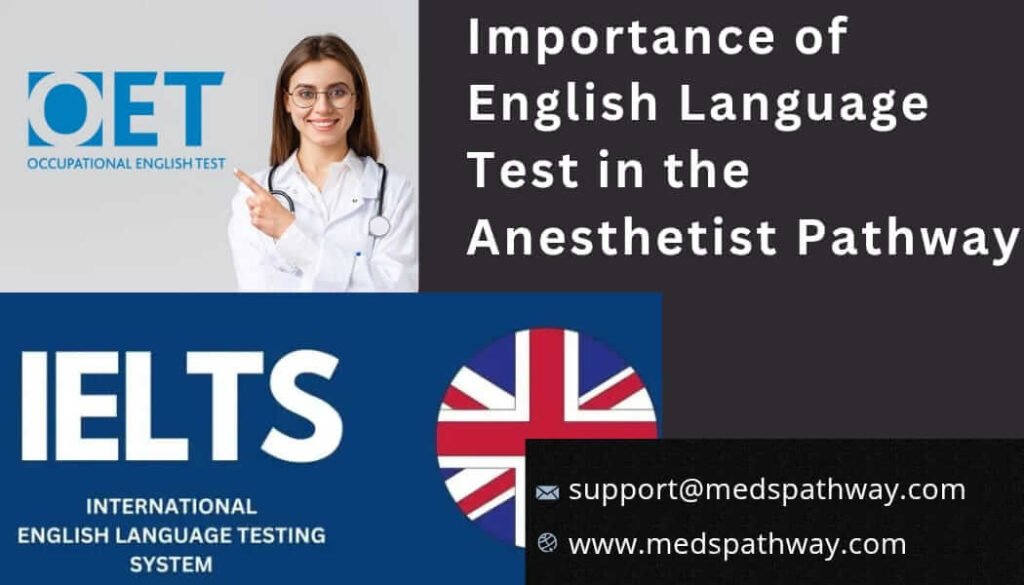
The Importance of English Language Test in the Anesthetist Pathway cannot be overlooked for International Medical Graduates (IMGs) planning to work as anesthetists in Australia. Strong English communication skills are essential for patient safety, clinical teamwork, medical documentation, and success in the ANZCA training and specialist assessment pathway. Most overseas-trained doctors are required to complete an approved English language test for doctors in Australia, usually the IELTS or OET, before applying for medical registration through the Medical Board of Australia and the Australian Health Practitioner Regulation Agency. In most cases, IMGs need a minimum IELTS score of 7.0 in each band or a Grade B in all sections of the OET for doctors to meet registration requirements.
Many candidates struggle particularly with the speaking and writing sections, which can delay their anesthetist registration pathway in Australia. A practical solution is to focus on medical English practice, clinical communication exercises, mock interviews, and regular OET or IELTS preparation classes designed specifically for healthcare professionals. Understanding the English language requirements for ANZCA, preparing early, and improving communication confidence can greatly increase an IMG’s chances of progressing smoothly through the Australian anesthesia training and specialist recognition pathway.
Meeting Clinical Experience Requirements for Anesthesia Specialization
Meeting the clinical experience requirements for anesthesia specialization is one of the most important steps for doctors pursuing the ANZCA pathway in Australia. The Australian and New Zealand College of Anesthetists requires candidates, especially International Medical Graduates (IMGs), to demonstrate strong hands-on clinical experience in anesthesia, perioperative medicine, intensive care, pain management, emergency response, and patient safety before progressing through specialist training and ANZCA assessments. Many overseas-trained doctors searching for how to become an anesthetist in Australia often face challenges such as insufficient supervised clinical exposure, differences in healthcare systems, or difficulty meeting Australian medical standards.
A practical solution is to gain structured hospital experience in accredited healthcare facilities, participate in supervised anaesthesia rotations, maintain detailed clinical logbooks, and improve communication and teamwork skills within multidisciplinary medical environments. Candidates should also focus on airway management, preoperative assessment, postoperative care, and crisis management because these are core areas commonly evaluated during ANZCA training and specialist assessment. By combining consistent clinical practice, mentorship from experienced anaesthetists, and proper ANZCA exam preparation, IMGs can gradually build the required competencies and improve their chances of successfully obtaining specialist recognition and anaesthesia registration in Australia.
Anaesthesia Training Structure in Australia
The Anaesthesia Training Structure in Australia is a carefully designed pathway that prepares doctors to become qualified specialist anaesthetists through supervised clinical practice, advanced medical education, and professional assessments. Managed by the Australian and New Zealand College of Anaesthetists, the ANZCA training program usually begins after completing medical registration in Australia and gaining hospital experience as a junior doctor. Trainees must meet ANZCA eligibility requirements, complete accredited anaesthesia training placements, maintain workplace-based assessments, and successfully pass the ANZCA Primary Exam and Final Exam. The training structure also includes intensive care exposure, pain medicine experience, emergency management skills, and professional development activities to meet Australian healthcare standards.
Many International Medical Graduates (IMGs) often struggle with understanding ANZCA exam preparation, specialist pathway requirements, and balancing clinical work with study. A practical solution is to follow a structured study schedule, use trusted ANZCA study resources, participate in mock viva sessions, and gain consistent clinical exposure in accredited hospitals. Understanding the Australian anesthesia training pathway early can help overseas-trained doctors avoid delays, improve exam performance, and successfully achieve specialist recognition and fellowship in Australia.
Strategies for ANZCA Exam Preparation
Preparing successfully for the ANZCA Exam requires a structured study approach, strong clinical understanding, and consistent revision over several months. Many International Medical Graduates (IMGs) and anaesthesia trainees preparing for the ANZCA Primary Exam and Final Exam often struggle with the large syllabus, time pressure, and complex clinical questions, making proper ANZCA exam preparation strategies extremely important.
A practical way to begin is by dividing the ANZCA syllabus into smaller weekly study sections covering physiology, pharmacology, physics, clinical anaesthesia, and intensive care topics. Most successful candidates use trusted ANZCA study resources such as Miller’s Anesthesia, Stoelting’s Pharmacology & Physiology in Anesthetic Practice, West’s Respiratory Physiology, https://www.anzca.edu.au/documents/anaesthesia-training-program-curriculum.pdf, past ANZCA exam reports, viva practice materials, and online ANZCA question banks. Creating a realistic study plan with daily revision goals, weekly mock exams, and regular viva practice sessions can greatly improve long-term retention and exam confidence.
Many candidates also use active recall techniques, flashcards, group discussions, and timed practice questions to improve speed and clinical reasoning skills. Effective time management is another key factor in ANZCA exam success, and candidates are often advised to dedicate fixed study hours each day, focus more on weaker subjects, and maintain a balance between study, clinical work, and rest to avoid burnout. Consistent practice with clinical scenarios, structured oral examination techniques, and evidence-based anaesthesia guidelines can significantly improve performance and increase the chances of passing the ANZCA exams successfully.
Specialist Assessment Pathways for International Medical Graduates (IMGs)
The Specialist Assessment Pathways for International Medical Graduates (IMGs) are designed to help overseas-trained anaesthetists obtain specialist recognition and medical registration in Australia through the Australian and New Zealand College of Anaesthetists. The process usually begins with primary source verification through EPIC, followed by an AMC pathway assessment, English language requirements such as IELTS or OET, and submission of qualifications, specialist training records, and clinical experience documents for ANZCA specialist assessment.
Depending on the candidate’s background, IMGs may be assessed as substantially comparable, partially comparable, or not comparable to Australian-trained specialists, which determines whether supervised practice, workplace-based assessments, or additional ANZCA examinations are required. Many candidates preparing for the ANZCA primary exam and fellowship assessment commonly use resources such as the ANZCA Primary Curriculum, Miller’s Anesthesia, Morgan & Mikhail’s Clinical Anesthesiology, the Oxford Handbook of Anaesthesia, past viva questions, and ANZCA preparation courses to strengthen their clinical knowledge and exam performance.
A successful ANZCA exam preparation strategy often includes a structured 6–12 month study plan, daily revision schedules, mock viva practice, question bank training, and weekly clinical case discussions to improve time management and reduce exam pressure. IMGs can improve their chances of success by focusing on high-yield anaesthesia topics, practicing communication skills regularly, joining study groups, and balancing clinical work with consistent exam preparation to meet Australian specialist standards more effectively.
Fulfilling the Training Requirements for Anesthesia Specialization
Fulfilling the training requirements for anesthesia specialization in Australia requires careful planning, structured clinical experience, and successful progression through the Australian and New Zealand College of Anaesthetists training pathway. International Medical Graduates (IMGs) and local doctors must first obtain medical registration in Australia, complete the required hospital experience, and meet ANZCA eligibility standards before entering the anaesthesia training program.
The ANZCA training pathway includes supervised clinical rotations, workplace-based assessments, primary and final ANZCA examinations, and continuous development of practical anaesthetic and patient management skills. Many doctors searching for how to become an anaesthetist in Australia often struggle with limited training positions, exam pressure, and adapting to the Australian healthcare system. A practical solution is to build strong ICU, emergency medicine, and perioperative care experience early, improve communication skills, and use reliable ANZCA exam preparation resources, mock viva sessions, and clinical case discussions consistently.
Developing a structured study schedule, understanding ANZCA curriculum requirements, and seeking mentorship from experienced anaesthetists can significantly improve performance, reduce common mistakes, and increase the chances of successfully completing anesthesia specialization and obtaining FANZCA recognition in Australia.
Conclusion: Practical Tips for International Doctors Pursuing Anesthetist Certification
In conclusion, international doctors pursuing anesthetist certification in Australia must approach the ANZCA pathway with proper planning, realistic expectations, and consistent preparation. Many IMGs fail to progress because they underestimate the ANZCA primary exam difficulty, delay improving their clinical communication skills, or rely on scattered study materials without understanding the Australian anaesthesia training system. A smarter approach is to focus early on AMC requirements, ANZCA exam preparation, English language proficiency, and gaining supervised clinical experience in Australia whenever possible.
Doctors who regularly practice ANZCA viva questions, use updated anaesthesia study resources, join structured preparation courses, and understand examiner expectations usually perform better in both the ANZCA primary and final examinations. Building strong time management habits, clinical confidence, and knowledge of Australian healthcare standards can significantly improve your chances of obtaining specialist recognition and successfully becoming a qualified anaesthetist in Australia.