
FRANZCR
Fellow of the Royal Australian and New Zealand College of Radiologists.
Overview
The Royal Australian and New Zealand College of Radiologists (RANZCR exam) is a Clinical Radiology examination which is structured and organized into two progressive phases, reflecting the increasing level of knowledge, responsibility, and clinical competence expected as trainees advance through the training program. Each phase is designed to assess different aspects of a trainee’s development, from foundational understanding to advanced diagnostic and clinical decision-making skills.
Phase 1, which is typically undertaken in the early years of radiology training, focuses on the essential building blocks required for safe and effective imaging practice. This phase assesses detailed knowledge of Anatomy, with an emphasis on recognising normal structures and variants across imaging modalities such as X-ray, CT, MRI, and ultrasound. In addition, trainees are examined in Applied Imaging Technology (AIT), which covers the physical principles behind imaging techniques, radiation safety, image acquisition, optimisation of image quality, and the safe use of contrast media. Phase 1 ensures that trainees have a strong grounding in how imaging works and how to interpret normal findings before progressing to more complex diagnostic tasks.
Phase 2 is undertaken during advanced training and evaluates whether trainees are capable of functioning at a near-consultant level. This phase places greater emphasis on clinical radiology practice and includes several complementary components. The Pathology examination tests a trainee’s ability to identify, interpret, and explain imaging features of a wide range of diseases across all body systems. The Case Reporting examination assesses real-world reporting skills, requiring candidates to analyse imaging studies, produce accurate and structured reports, prioritise critical findings, and suggest appropriate differential diagnoses or further investigations. This component closely mirrors everyday consultant radiology work.
In addition, Phase 2 includes the Objective Structured Clinical Examination in Radiology (OSCER), a viva-style assessment. The OSCER evaluates clinical reasoning, communication, professionalism, and patient safety through structured oral stations. Candidates may be asked to justify imaging choices, discuss management pathways, recognise urgent or life-threatening findings, and demonstrate awareness of medico-legal and ethical considerations.
Together, the two-phase examination framework provides a comprehensive assessment of a trainee’s progression from foundational knowledge to advanced diagnostic competence. Successful completion of both phases confirms that the trainee has the technical expertise, clinical judgment, and safety awareness required to practise independently as a clinical radiologist.
Common Uses:
Clinical Radiologist:

A clinical radiologist is a medical specialist with advanced training in the use and interpretation of diagnostic imaging to support patient care. Their primary role is to analyse medical images—such as X-rays, computed tomography (CT) scans, magnetic resonance imaging (MRI), ultrasound, and other imaging modalities—to identify normal anatomy, detect disease, and assess injury or treatment response.
Clinical radiologists work closely with referring doctors and other healthcare professionals, providing expert diagnostic opinions that guide patient management, treatment decisions, and further investigations. Beyond simply “reading” images, they integrate imaging findings with clinical information, laboratory results, and patient history to produce accurate and clinically meaningful reports.
In addition to diagnostic interpretation, clinical radiologists play a key role in patient safety and quality of care. They advise on the most appropriate imaging tests for specific clinical problems, help minimise radiation exposure, and may participate in image-guided procedures such as biopsies, drainages, or injections. Their expertise is essential across a wide range of medical specialties, including emergency medicine, surgery, oncology, neurology, and paediatrics.
Overall, a clinical radiologist functions as a central diagnostic consultant, using advanced imaging technology and clinical judgment to help ensure timely, accurate diagnoses and optimal patient outcomes.
Radiation Oncologist:
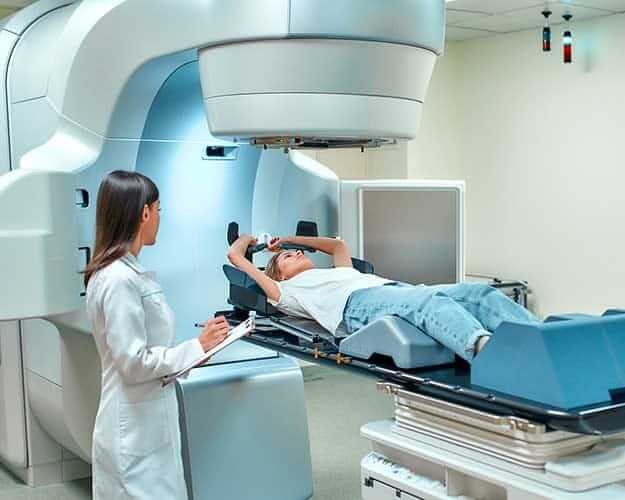
A radiation oncologist is a medical specialist who focuses on the treatment of cancer and certain non-cancerous conditions using radiation therapy. Their role involves carefully planning and delivering high-energy radiation to destroy cancer cells or stop them from growing, while minimising damage to surrounding healthy tissues.
Radiation oncologists are involved in every stage of a patient’s care. They assess patients to determine whether radiation therapy is appropriate, explain treatment options and potential side effects, and design highly individualised treatment plans. This planning process uses advanced imaging such as CT, MRI, and PET scans, along with sophisticated computer systems, to precisely target tumours and critical organs.
Throughout treatment, radiation oncologists monitor patients closely, manage side effects, and adjust therapy as needed to ensure both safety and effectiveness. They work as part of a multidisciplinary cancer care team, collaborating with medical oncologists, surgeons, radiologists, physicists, radiation therapists, nurses, and allied health professionals to deliver comprehensive cancer care.
In addition to direct patient care, radiation oncologists contribute to cancer prevention, research, and quality improvement initiatives. Their expertise is essential in achieving local tumour control, relieving cancer-related symptoms, and improving survival and quality of life for people with cancer.
RANZCR Exam Eligibility

Eligibility to sit the RANZCR examinations is governed by strict training and registration requirements to ensure that candidates have progressed appropriately through an accredited specialist training pathway and are adequately prepared for assessment.
To be eligible, candidates must be actively enrolled as trainees in an RANZCR-accredited training program, either in Clinical Radiology or Radiation Oncology. They must also hold current membership with RANZCR in the appropriate trainee category and remain in good standing with the College at the time of application. These requirements confirm that candidates are formally recognised by the College and are undertaking training within approved institutions under appropriate supervision.
In addition, candidates must meet clearly defined, time-based training milestones before attempting each examination phase. For Clinical Radiology Phase 1, trainees are required to have completed a minimum of 12 months (1.0 full-time equivalent) of accredited radiology training. This early training period allows trainees to develop foundational knowledge in anatomy, imaging modalities, and imaging technology, which are essential for success in the Phase 1 assessments.
Eligibility for Phase 2 examinations requires more advanced experience. Trainees must have completed at least 36 months (1.0 full-time equivalent) of accredited radiology training. This period includes exposure to a broad range of imaging subspecialties through mandatory site and subspecialty rotations, ensuring trainees gain comprehensive experience across different clinical settings and patient populations. These rotations are designed to build diagnostic expertise, reporting skills, and clinical judgment at a level approaching independent specialist practice.
Overall, the RANZCR eligibility framework ensures that candidates attempt each examination only after acquiring sufficient supervised clinical experience and training breadth. This structured progression supports both patient safety and the maintenance of high professional standards in radiology and radiation oncology.
Conclusion
Passing the RANZCR Fellowship Exam requires a structured study plan, strategic practice, and expert guidance. With the right approach, Radiology trainees can maximize their performance and achieve Fellowship status. MEDS PATHWAY has over a decade of experience in helping RANZCR Trainees with this exam. An experienced Team of FRANZCR that guides you all through the stressful exam process.

How we assist candidates in clearing this exam
Exact examination Q&A bank
Previous Score upgrade
Direct certificate:
Other Exams
General Practice
Specialist Medical Exams
Dentists
Nurses/Midwifery
Pharmacists
Our Community
Your career progression starts here. Join professionals who have achieved faster, smarter outcomes with Meds Pathway.




Experience the proven success of Meds Pathway—where expertise, trust, and results define every journey.
At Meds Pathway, we are defined by our commitment to excellence and our dedication to supporting aspiring medical professionals in achieving their certification and licensure goals. Our reputation is built on results, professionalism, and trust—but beyond our own standards, the experiences of our clients speak for themselves.
Successful Candidates
Years of Industry Experience:
Global success rate
Recognition